A custom home gives you the freedom to create a space designed around your lifestyle, but the budget behind that vision can vary significantly. Before making plans or choosing designs, it is important to understand what factors determine the overall construction cost.
There is no single number that works for every project. Your final cost depends on location, square footage, design complexity, site conditions, labor, materials, finishes, permits, utilities, financing, and how the project is managed.
As a national benchmark, NAHB’s analysis of custom, contractor-built homes started in 2024 reported a median contract price of approximately $166 per square foot, excluding the improved lot. U.S. Census Bureau data also reported a median contract price of approximately $404,000 for contractor-built single-family homes started in 2025.
I would use those numbers only as reference points. Your actual custom home budget should be built around your specific plans, property, location, and bids.
What Determines the Cost to Build a Custom Home?
Two homes with the same square footage can have dramatically different construction costs.
A simple 2,500-square-foot home with standard finishes, straightforward rooflines, and an easy building site may cost considerably less than another 2,500-square-foot home with premium windows, custom cabinetry, complex architecture, and difficult site conditions.
Location and Labor Costs
Construction costs vary across states, cities, and individual markets.
Local wages, subcontractor availability, material transportation, permit requirements, building codes, and market demand can all influence pricing.
This is why I would never use a national cost-per-square-foot figure as the final estimate for your project.
Size and Design Complexity
Larger homes generally require more materials and labor, but square footage is only part of the equation.
Complex rooflines, large windows, custom structural elements, multiple bathrooms, extensive exterior finishes, and complicated layouts can increase costs without dramatically increasing the home’s size.
Material and Finish Choices
Your selections can significantly change the final construction cost.
Cabinets, countertops, flooring, appliances, windows, doors, plumbing fixtures, lighting, roofing, and siding can all range from economical to premium.
If you are still deciding what type of home fits your goals, Empower Builds provides free home plans that can help during the early planning stage.
Where Does the Money Go When Building a Custom Home?
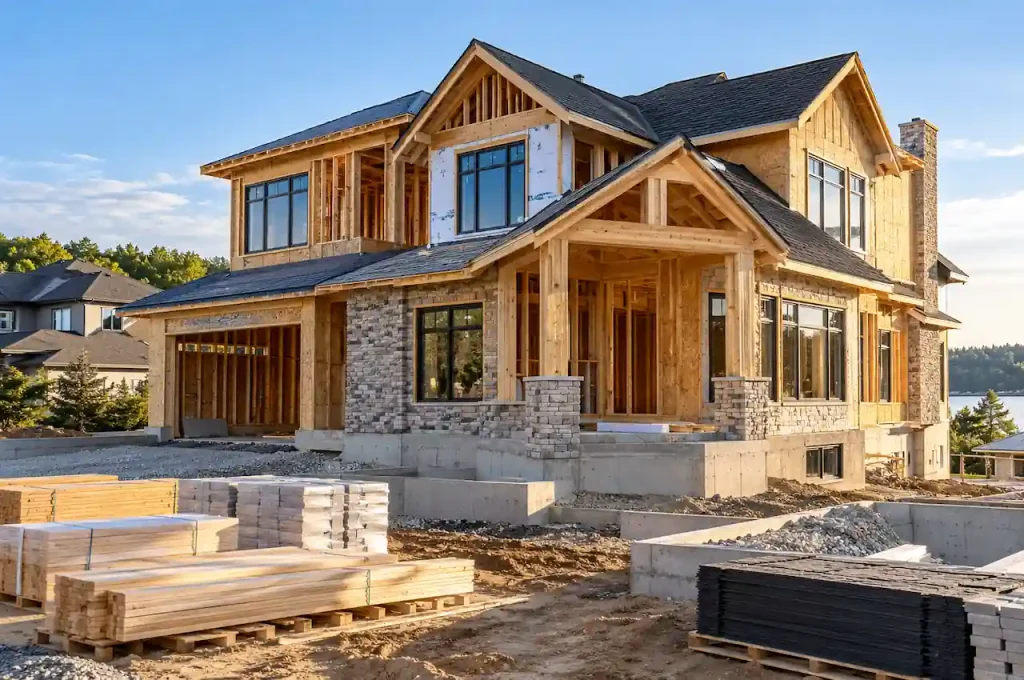
Your construction budget needs to account for much more than framing, concrete, and labor.
NAHB’s 2024 Construction Cost Survey found that interior finishes were the largest major construction category in its sample, followed by major system rough-ins and framing.
For your individual project, I recommend thinking about costs in several major groups.
Land and Site Preparation
Buying the property is only the beginning.
Your land-related costs may include surveys, clearing, excavation, grading, drainage, driveway access, utility connections, well or septic systems, and other site improvements.
A cheaper property can sometimes become more expensive overall if significant work is required before construction can begin.
Plans, Permits, and Construction
Before physical construction starts, you may already have expenses related to plans, engineering, surveys, permits, plan reviews, and other professional requirements.
Construction then adds foundations, framing, roofing, windows, exterior finishes, plumbing, electrical, HVAC, insulation, drywall, cabinetry, flooring, painting, fixtures, appliances, and final completion work.
I recommend looking at the complete project cost, not simply the cost of the house structure.
Should Land Be Included in Your Custom Home Budget?
Yes. Land should be part of your total project budget, although I recommend tracking it separately from house construction.
Suppose one property costs less but requires extensive clearing, grading, a long driveway, utility extensions, and difficult foundation work. Another property costs more initially but is significantly easier to develop.
The cheaper lot may not create the cheaper overall project.
Think in Terms of Development Cost
Before buying land, consider what it may take to make that property construction-ready.
Site conditions can have a major effect on your final budget, especially when you are planning to build your own house without a general contractor and will be coordinating more of these costs yourself.
How Should I Create a Custom Home Budget?
I recommend starting with the maximum amount you can realistically commit to the entire project, not simply the amount you expect to spend on construction.
Then divide that amount into categories.
Your budget may need to include land, site preparation, plans, engineering, permits, construction, finishes, utilities, financing, exterior improvements, landscaping, and contingency.
Replace Estimates With Actual Bids
Early estimates are useful for deciding whether a project appears financially realistic.
As your plans become more complete, replace those estimates with actual bids.
When comparing bids, look at scope as carefully as price. A $30,000 proposal is not necessarily cheaper than a $35,000 proposal if important work is excluded from the lower bid.
You can review what Empower Builds does to understand how budgeting, bid review, subcontractor guidance, scheduling, and project organization can fit into an owner-builder project.
How Much Contingency Should I Include?
I recommend keeping money available for unexpected project conditions rather than committing your entire budget before construction begins.
There is no contingency amount that works for every custom home. The appropriate amount depends on factors such as site uncertainty, design complexity, completeness of plans, selections, and how much pricing has already been confirmed.
Do Not Use Contingency for Optional Upgrades
Your contingency should protect the project from genuine unexpected expenses.
If you use it early for upgraded countertops, flooring, appliances, or other optional selections, that money will no longer be available when an actual construction problem appears.
Track upgrades and unexpected expenses separately.
Can Being an Owner Builder Reduce Custom Home Costs?
Potentially, but becoming an owner builder does not automatically make a home cheaper.
When you manage the project yourself, you can have greater visibility into subcontractor bids, purchasing, selections, schedules, changes, and other decisions affecting the budget.
Before choosing this approach primarily because of potential savings, understand the differences between an owner builder and a general contractor.
However, you also take on responsibilities normally handled by a general contractor.
What Custom Home Costs Are Commonly Forgotten?
A construction estimate may not include every expense required to complete your home.
Homeowners sometimes overlook permit fees, utility connections, temporary utilities, surveys, engineering changes, dumpsters, equipment rentals, delivery charges, financing expenses, landscaping, driveways, appliances, cleanup, and other final costs.
Allowances can also create budget problems.
If your budget includes $15,000 for a particular finish category but your actual selections cost $24,000, your project has increased by $9,000.
I recommend checking major allowances against the products you realistically expect to purchase before construction begins.
Empower Builds also discusses the potential financial advantages of managing your own home-building process. Any savings should be treated as project-specific rather than guaranteed.
How Can I Keep My Custom Home Budget Under Control?
Budget control does not stop when construction starts.
Maintain one current budget showing your original estimates, accepted bids, approved changes, payments, remaining balances, allowances, and contingency.
Your budget should also work alongside your construction schedule. You need to know when materials must be ordered, when subcontractors are expected, when selections must be completed, and when major payments are approaching.
For homeowners managing their own projects, Buildertrend support can help organize project budgets, schedules, documents, and communication.
Most importantly, control changes before work is completed. Moving something on a drawing can be relatively simple. Moving it after framing, plumbing, electrical, or finishes are installed can involve multiple trades and additional costs.
Plan the Complete Project, Not Just the House
The cost to build a custom home is ultimately the result of hundreds of individual decisions.
Your site affects development costs. Your plans affect bids. Your specifications affect materials. Your selections affect finishes. Your schedule affects coordination. Your changes can affect labor and rework.
That is why I recommend building a complete project budget, replacing estimates with actual bids as early as possible, maintaining contingency, and reviewing costs throughout construction.
If you are preparing to build and want guidance with budgeting, bids, scheduling, or the owner-builder process, contact Empower Builds to discuss your project.
Frequently Asked Questions
How much does it cost to build a custom home per square foot?
NAHB reported a national median contract price of approximately $166 per square foot for custom, contractor-built homes started in 2024, excluding the improved lot. Actual costs vary significantly by location, design, site, labor, and finishes.
Is land included in the cost to build a custom home?
Not necessarily. Construction estimates and per-square-foot figures may exclude land. Your total project budget should account separately for the property, site preparation, utilities, design, permits, financing, and construction.
What is the most expensive part of building a custom home?
It varies by project. NAHB’s 2024 survey identified interior finishes as the largest major construction-cost category in its sample, but your individual cost distribution may be different.
What costs are commonly forgotten when building a house?
Commonly overlooked expenses can include site work, permits, engineering, utility connections, temporary utilities, delivery charges, equipment, financing expenses, landscaping, driveways, appliances, and cleanup.
Can I save money by acting as my own builder?
Potentially. Acting as an owner builder may provide greater control over bids, subcontractors, selections, and other costs, but savings are not guaranteed and you assume additional project-management responsibilities.
How can I get a more accurate custom home estimate?
Develop your plans and specifications, understand site conditions, research local requirements, and obtain detailed bids based on consistent scopes. Replace preliminary allowances with actual pricing as the project develops.